Evaluation of yellows in VCUS sugar beet trials
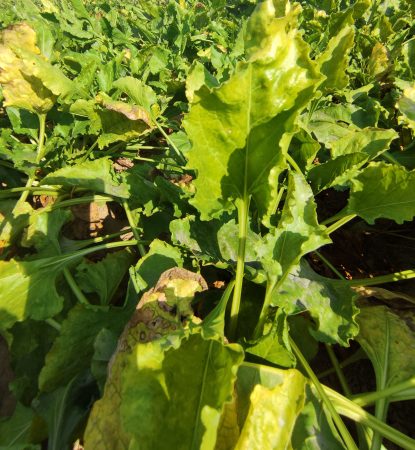
The problem of yellows has had a major impact on sugar beet cultivation over the last 5 years, leading to a thorough review of the methods used to assess new beet varieties submitted to the CTPS.
The VCUS networks are now based on 7 sites with 10 repetitions, including 4 protected from aphids, 2 inoculated with the BMYV virus, 2 with the BChV virus and 2 with the BYV virus. All the varieties under study at the CTPS are evaluated in this way.
To do so, it is necessary to raise viruliferous aphids and then bring them to the plants in the field. The inoculation of each of the modalities concerned was carried out manually by the experimenters in the national experimentation network. A total of 32,000 well-identified plants were inoculated. The presence of the desired viruses and the absence of undesirable viruses were detected by RT-qPCR using a protocol developed by BioGEVES.
One of the main challenges of this protocol is to identify varieties with acceptable sugar yields under both inoculated and non-inoculated protected conditions. This complete experimental set-up has been in place for 2 years. The development of the inoculation and RT-qPCR molecular detection methods was subsidised by the National Research and Innovation Plan (PNRI) “Towards operational solutions against sugar beet yellows” as part of a project led by GEVES, “Yellows Resisbeet”.