Development of pathosystems: tools for evaluating seed protection solutions
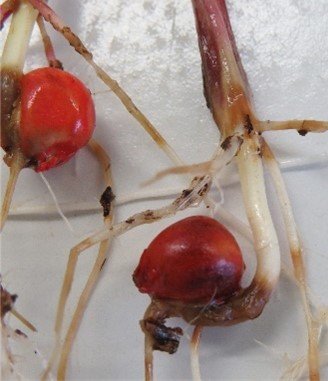
GEVES is continuing to develop its methodology expertise in evaluating biocontrol solutions for seeds and seedlings, at the service of the seed sector and a sustainable transition. The increase in this activity through requests for contract testing, and our active participation in numerous research projects (SUCSEED, ASCOLUP, ACTIFOL, SEEDBIOPROTECT), have enabled us to continue developing new pathosystems. This year, no fewer than five new pathosystems were developed: Rhizoctonia-maize / Fusarium-sunflower / Fusarium-rapeseed / Downy mildew-cabbage / Pythium-carrot. One of these, “downy mildew on Cabbage”, required a different approach in terms of control, multiplication and maintenance than pathosystems managed via soil contamination. This obligatory pathogen requires the presence of its host plant to develop, the strain must be maintained on a weekly basis. The other pathotests were developed using a substrate contamination approach, with the aim of evaluating seed treatments for damping-off or post-germination attacks. The development of these tools was carried out to enhance the development of knowledge and methodologies, in order to evaluate the effectiveness of these new solutions.
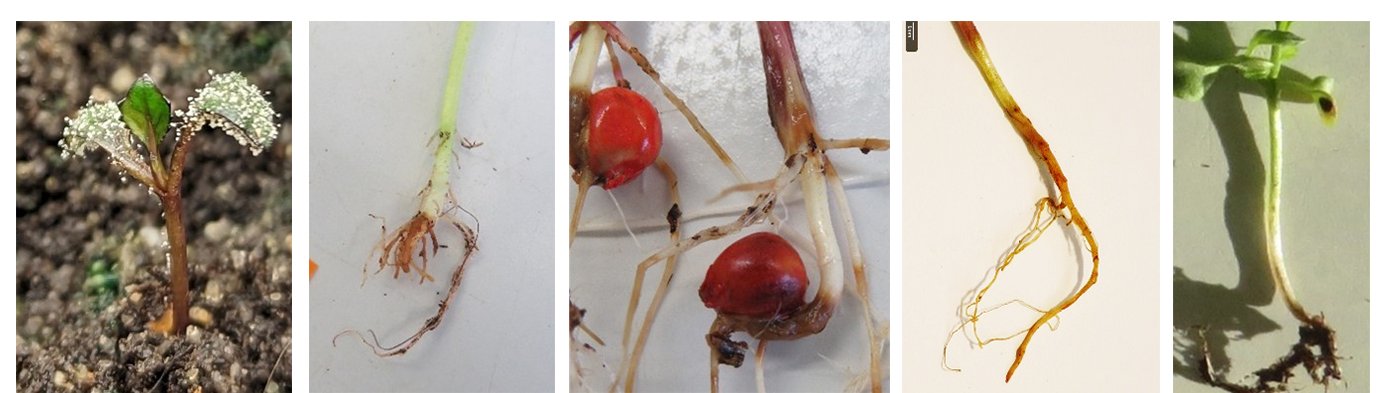
Fig 1 : Pathosystems developed (in order of appearance) : Mildew-cabbage / Fusarium-sunflower/ Rhizoctonia-maize/ Pythium-carrot / Fusarium-rapeseed