The METASERV project: better understanding service plants for pest control
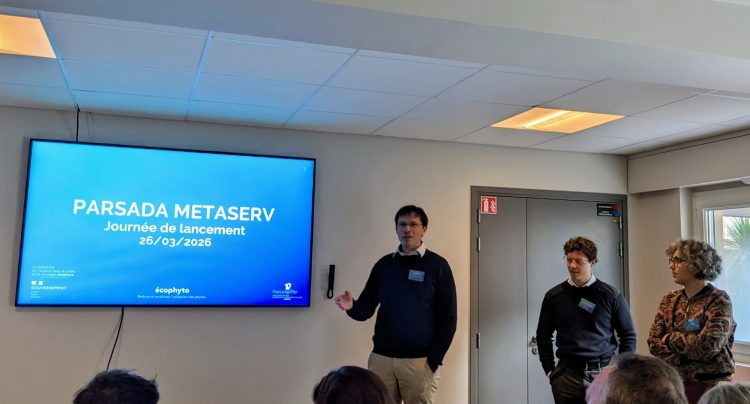
The kick-off meeting for the PARSADA METASERV project took place on 26 and 27 March. Led by INRAE and bringing together around twenty partners, METASERV aims to identify and characterise service plants capable of controlling pests. To this end, the project employs complementary approaches – genomic, metabolomic and phenotypic – and combines laboratory experiments with field trials.
The aim: to gain a better understanding of the mechanisms of action and the key characteristics that determine the effectiveness of these plants in controlling pests.
The expected results include:
- a collection of service plants characterised, from the laboratory to the field, for their regulatory effects;
- an open database intended for researchers, variety evaluators (breeding, registration, post-registration) and growers, to facilitate the selection of the most suitable varieties and support their deployment
GEVES is actively involved in Action 3, “Evaluation of services and disservices in the field”, and is a co-leader of Action 5, “From knowledge to application: tools, training and communication”.
During the event, a presentation by the CISPS, delivered by Julie Gombert of GEVES (facilitator) and Delphine Moreau of INRAE (chair), clarified the roles of the CTPS, the Catalogue and Inter-Sections in relation to registration under the “use in service plants” category. This presentation sparked numerous discussions and generated keen interest among the partners.