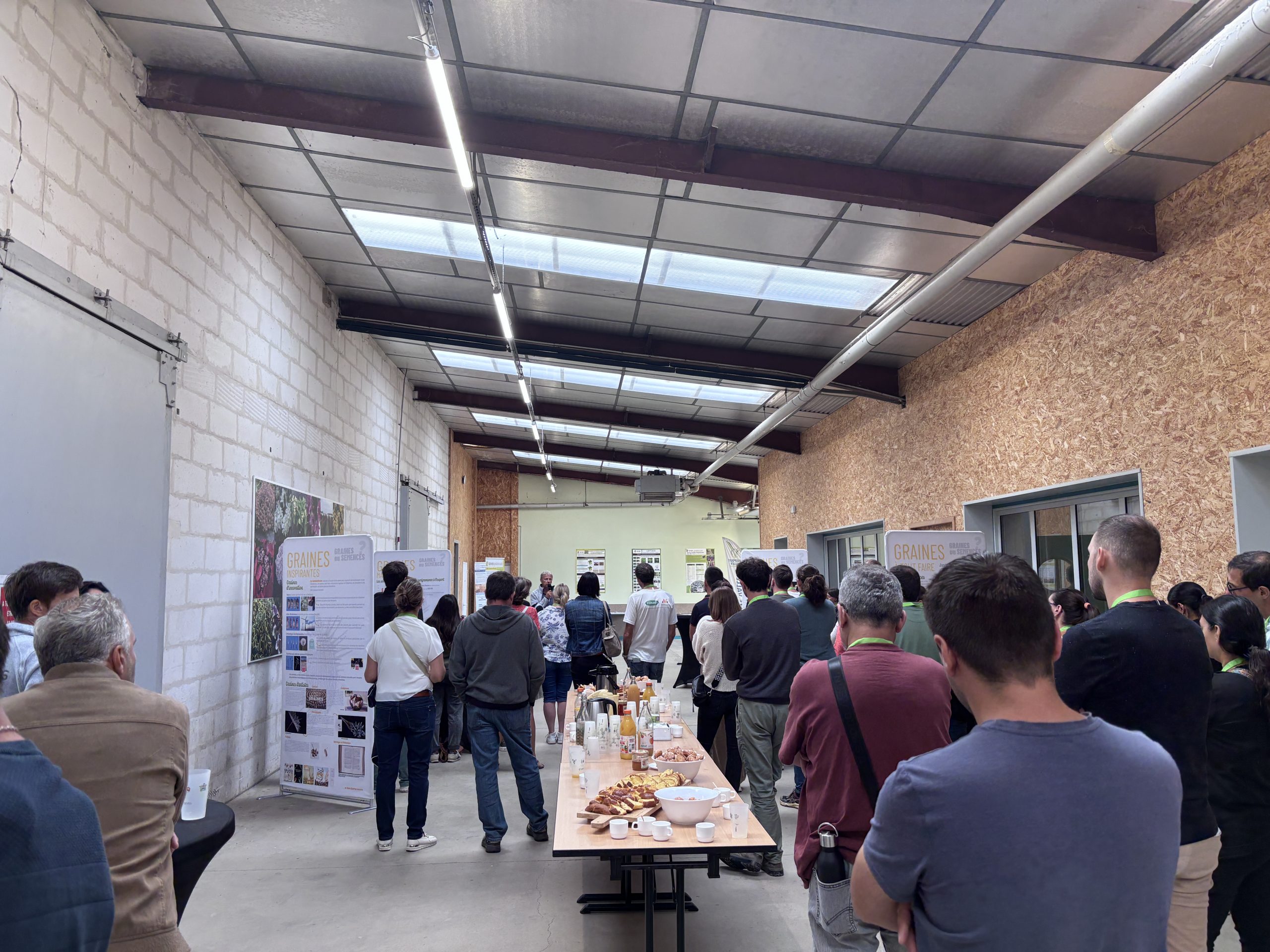
Launch of the IPSEELON research project
On 19 March, the kick-off meeting for the IPSEELON research project (Epidemiological Surveillance and Pest Control of Piercing-Sucking Insects) took place. This project is part of the PARSADA “piercing-sucking insects” programme and aims to develop and promote innovative, effective and sustainable techniques against aphids and leafhoppers. It brings together around ten partners – including GEVES – with a budget of €7 million spread over four years (2026–2030). The diversity of the partners offers the opportunity to work on a wide range of species/pest combinations, such as sugar beet and the leafhopper responsible for Low Yield Syndrome (SBR).
GEVES is heavily involved in Action 1.4: “Developing new molecular tools for the detection and identification of beet pathogens and pests: for Candidatus Arsenophonus phytopathogenicus (CAP) and Candidatus Phytoplasma solani (CPS)”. To this end, GEVES has already had the opportunity to discuss existing CAP/CPS detection protocols with the IFZ (Sugar Beet Research Institute) in Germany and collected beetroot samples in 2025 for the initial tests.
In 2026, BioGEVES plans to recruit an assistant engineer within its “Detection” division to lead Action 1.4. Various protocols and samples will be tested, and new plots will be sampled to support the development of the molecular tool.
The outputs of this project will support the CTPS and breeders in the development and evaluation of beetroot varieties that are resistant or tolerant to SBR and RTD, by providing reliable data on varietal performance for registration in the Catalogue and by developing reliable evaluation protocols to test the response of beet varieties.
These tools will also provide a method of analysis at national level that is adapted to the strains present in France, thereby contributing to epidemiological surveillance.
In addition, GEVES will also be involved in supervising the transfer of protocols to the CTPS under semi-controlled conditions, with a view to improving the success rate of trials assessing tolerance/resistance to WDV in wheat and barley.