Innovations and advances for more efficient and sustainable protein crops: highlights from the CTPS Protein Crops Section
At its meeting on 13 November, the CTPS Protein Crops Section proposed the inclusion of 14 new varieties in the Official Catalogue, including:
- 1 variety of spring field bean with low vicine and convicine content
- 4 varieties of winter peas, including 1 on list B
- 7 varieties of spring peas, including 1 on list B
- 2 varieties of lentils
Review of work in progress and outlook for the Section
Recent work by the Section and its expert groups has focused on improving assessment mechanisms, integrating varietal innovations and adapting decision-making rules.
Research on Aphanomyces has led to the identification of a spring pea cultivar with high intrinsic resistance, significantly reducing the production of oospores on its roots and thus helping to preserve soil health for subsequent susceptible crops.
A statistical study confirms the robustness of the current system for analysing antitrypsin factors (FATs) in winter protein peas. A relaxation of the elimination threshold has been agreed in order to better take into account varieties that are otherwise of agronomic or environmental interest.
Finally, analyses of coral peas have shown that carotenoids are stable in light and less present in coral peas than in green peas, and no longer require systematic testing.
The Section also continued to adapt its faba bean evaluation systems: a new single price for winter faba beans, the integration of trials in organic agriculture, and the development of a bonus system for disease resistance (Ascochytosis and Botrytis).
The PhenoLAG project has enabled the testing of phenotyping devices in nurseries for rust and botrytis in field beans, while the assessment of aerial diseases in peas remains complex and requires combined field (architecture)/controlled conditions approaches. The methodologies developed should enable results on the varieties under study to be examined as early as 2026 within the framework of the CTPS.
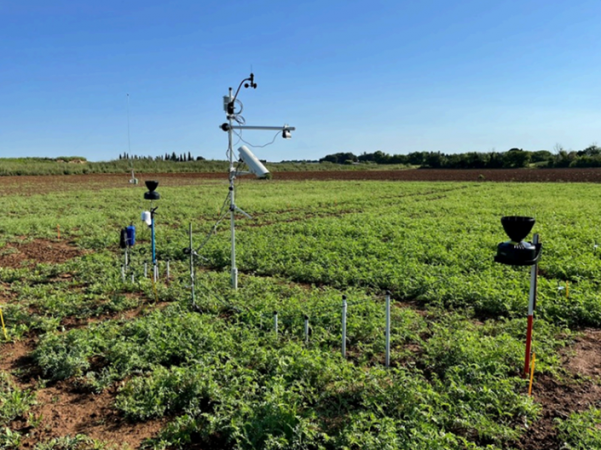
With regard to chickpeas, the first official test for Ascochyta shows encouraging results, and a new project (Ascochick) will further our understanding of pathotypes, the correlation between field and laboratory, and alternative solutions. Envirotyping work applied to VSCU trials will continue and be extended to the entire network in 2026.
Finally, several research projects should help to strengthen variety evaluation: conductimetry and imaging to assess cold resistance and adaptation, FAT genetics, genotype-environment interactions, multi-species SNP genotyping for DUS, protein quality, and water stress resilience. These advances will consolidate the registration and evaluation tools used in the agroecological transition.